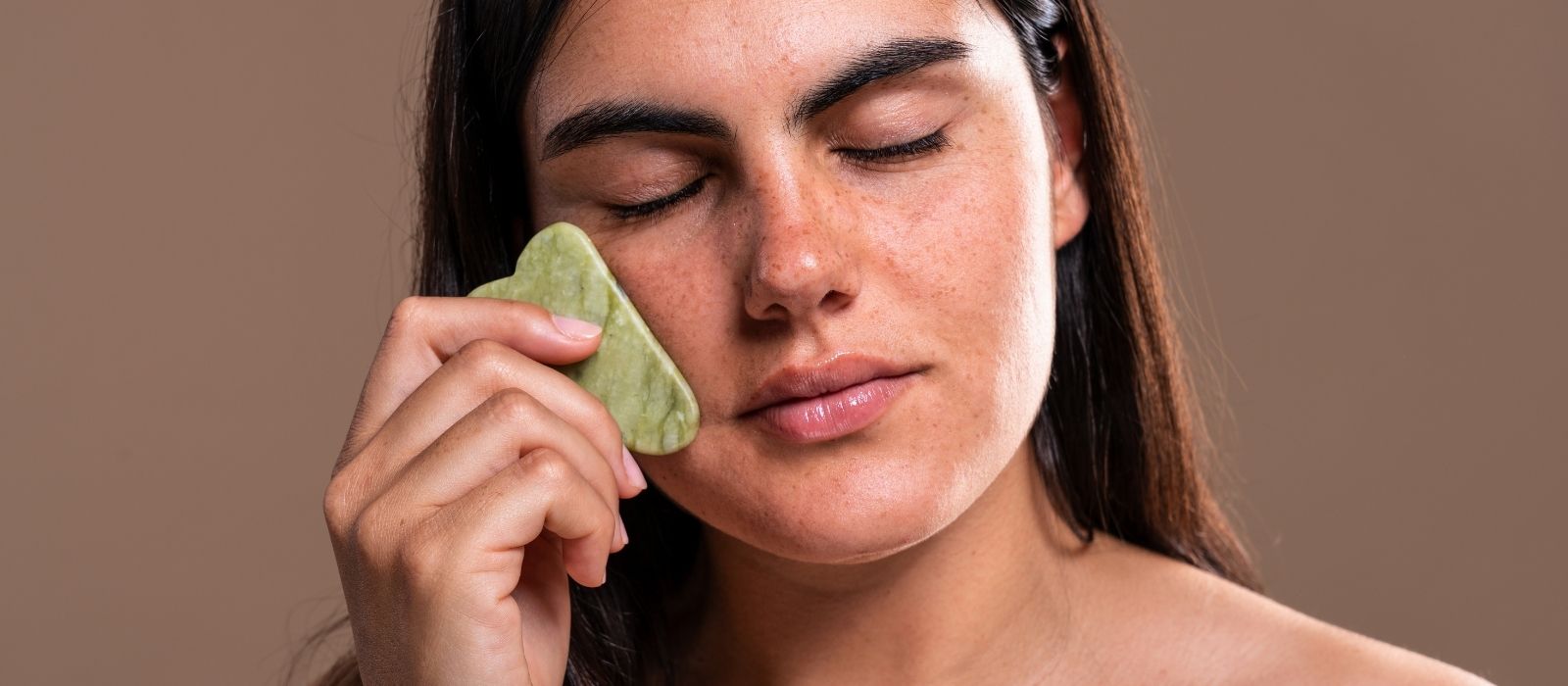
Gua sha can reduce morning puffiness and jaw tension when done correctly. Here's what actually works and what's just social media hype.
You wake up looking like you stored water in your cheeks overnight. Your jaw feels locked from grinding teeth through stress dreams. The internet says gua sha fixes both, but half the tutorials show people barely touching their skin while promising miracle results.
Here's what actually happens: gua sha can reduce puffiness and jaw tension, but only when you understand why they happen and use the right pressure in the right places. Most people scrape too gently to move lymph fluid or press too hard on areas that need finesse.
Morning puffiness comes from lymphatic fluid that pools while you sleep horizontal for eight hours. Your lymphatic system doesn't have a pump like your circulatory system does. It relies on muscle movement and gravity to keep fluid moving. When you're flat and still, fluid accumulates in soft tissues, especially around your eyes and jawline.
How Gua Sha Moves Lymphatic Fluid
Gua sha works by manually pushing stagnant lymphatic fluid toward your lymph nodes, where it gets filtered and recycled back into your bloodstream. The technique requires firm, directional pressure — not the feather-light strokes you see in most videos.
Your lymph nodes cluster in specific spots: behind your ears, along your jawline, under your chin, and at the base of your neck. Every gua sha stroke should end at one of these drainage points. Scraping randomly across your face moves fluid around without actually draining it anywhere useful.
Research from the University of California San Diego found that manual lymphatic drainage techniques can reduce facial swelling by 23% within 30 minutes. The key is consistent pressure that's firm enough to compress tissues but gentle enough not to damage delicate facial skin.
Why Your Jaw Holds Tension
Jaw tension builds from unconscious clenching, usually triggered by stress or poor sleep positioning. Your temporomandibular joint connects your jaw to your skull through complex muscle groups that extend from your temples down to your neck.
When you clench, these muscles stay contracted even after you stop. The fascia — connective tissue surrounding the muscles — gets tight and restricts blood flow. That's why jaw tension often comes with headaches and neck stiffness.
Gua sha addresses this by breaking up fascial restrictions and increasing blood flow to tight muscle groups. But it requires targeting specific trigger points, not just scraping along your jawline. Using gua sha correctly means understanding facial anatomy, not just following trending techniques.
Technique That Actually Works for Puffiness
Start with your neck. Use upward strokes from your collarbone to behind your ears. This opens drainage pathways before you work on your face. Skip this step and you're pushing fluid into already congested areas.
For under-eye puffiness, use the curved edge of your tool. Start at your inner corner and sweep outward toward your temple with medium pressure. The skin here is thin, but lymphatic vessels run deeper. Too-gentle pressure won't reach them.
Jawline puffiness needs firm, upward strokes from your chin toward your ears. Press hard enough that you feel slight resistance from the tissue, but stop if you see redness that doesn't fade within two minutes.
Jaw Tension Relief Technique
Place your tool at the corner of your jaw where you can feel the muscle bulge when you clench. Apply firm, circular pressure for 10-15 seconds, then stroke upward toward your ear. This targets the masseter muscle — your primary chewing muscle that holds the most tension.
Move to your temples and use small circles with the pointed end of your tool. This addresses the temporalis muscle, which often stays tight when your jaw is tense. Different massage tools work better for different areas, but gua sha stones provide the right combination of firmness and smooth edges for jaw work.
Work down to the muscles along your neck where jaw tension often radiates. Use long strokes from behind your ear down to your collarbone.
What Doesn't Work
Doing gua sha on dry skin creates drag that can damage your skin barrier. Always use a facial oil or serum — enough that your tool glides smoothly without pulling.
Daily gua sha isn't necessary for most people. Three times a week maintains results without over-stimulating tissues. People with darker skin need to be especially careful about frequency since over-manipulation can trigger hyperpigmentation.
Expecting instant results sets you up for disappointment. Lymphatic drainage shows immediate effects on puffiness, but jaw tension relief builds over weeks of consistent practice. Your fascia adapts slowly to manual manipulation.
The stone material matters less than your technique. Expensive crystals don't work better than basic stainless steel tools if you're using proper pressure and direction.
Frequently Asked Questions
How long should I do gua sha for puffiness and jaw tension?
Five to ten minutes total. Spend two minutes on your neck to open drainage, three minutes on facial puffiness, and three to five minutes on jaw tension points. Longer sessions don't provide additional benefits and can irritate sensitive skin.
Can gua sha make jaw tension worse?
Yes, if you use too much pressure or work against your lymphatic flow direction. Always stroke toward lymph nodes, not away from them. If you feel increased tension after gua sha, you're likely pressing too hard or moving in the wrong direction.
How often should I use gua sha for puffiness and jaw tension?
Three times per week for maintenance, daily for one week if you're dealing with acute puffiness or tension flare-ups. Your tissues need recovery time between sessions. Overdoing it can cause inflammation that makes both puffiness and tension worse.