Discover why hormonal changes cause hair thinning in women, from PCOS to menopause. Learn about effective treatments and what actually works to stop hair loss.
Your ponytail used to be thick enough to wrap the elastic three times. Now it barely makes it around twice. You find clumps in the shower drain that would have alarmed you five years ago, but now they're just Tuesday.
Hair thinning in women isn't just about genetics or aging. Your hormones are the primary driver behind why your hair follicles shrink, your growth phases shorten, and your hairline starts creeping backward. The good news? Understanding which hormones are causing the problem gives you a clear path to treatment that actually works.
Hormonal hair loss happens when androgens like DHT (dihydrotestosterone) bind to receptors in your hair follicles. This binding gradually miniaturizes the follicles, making each new hair thinner and weaker than the last. Eventually, follicles stop producing visible hair altogether. Women with normal hormone levels can still experience this if their follicles are genetically sensitive to even small amounts of androgens.
What Hormones Cause Hair Thinning in Women
DHT is the main culprit, but it doesn't work alone. Estrogen normally counteracts DHT by extending your hair's growth phase and keeping follicles healthy. When estrogen drops during perimenopause, menopause, or after stopping birth control, DHT gets free rein over your follicles.
Insulin resistance amplifies the problem by increasing androgen production. Women with PCOS often see hair thinning alongside other symptoms like irregular periods and difficulty losing weight because elevated insulin triggers the ovaries to produce more testosterone, which converts to DHT.
Thyroid dysfunction disrupts the entire hair growth cycle. An underactive thyroid slows everything down, including how quickly your hair grows and how long it stays attached. Hyperthyroidism does the opposite, speeding up hair loss by pushing follicles into the resting phase too quickly.
Cortisol from chronic stress interferes with hair growth by diverting resources away from non-essential functions. Stress causes hair loss through a specific pattern called telogen effluvium, where large numbers of follicles enter the resting phase simultaneously.
How to Tell If Your Hair Loss Is Hormonal
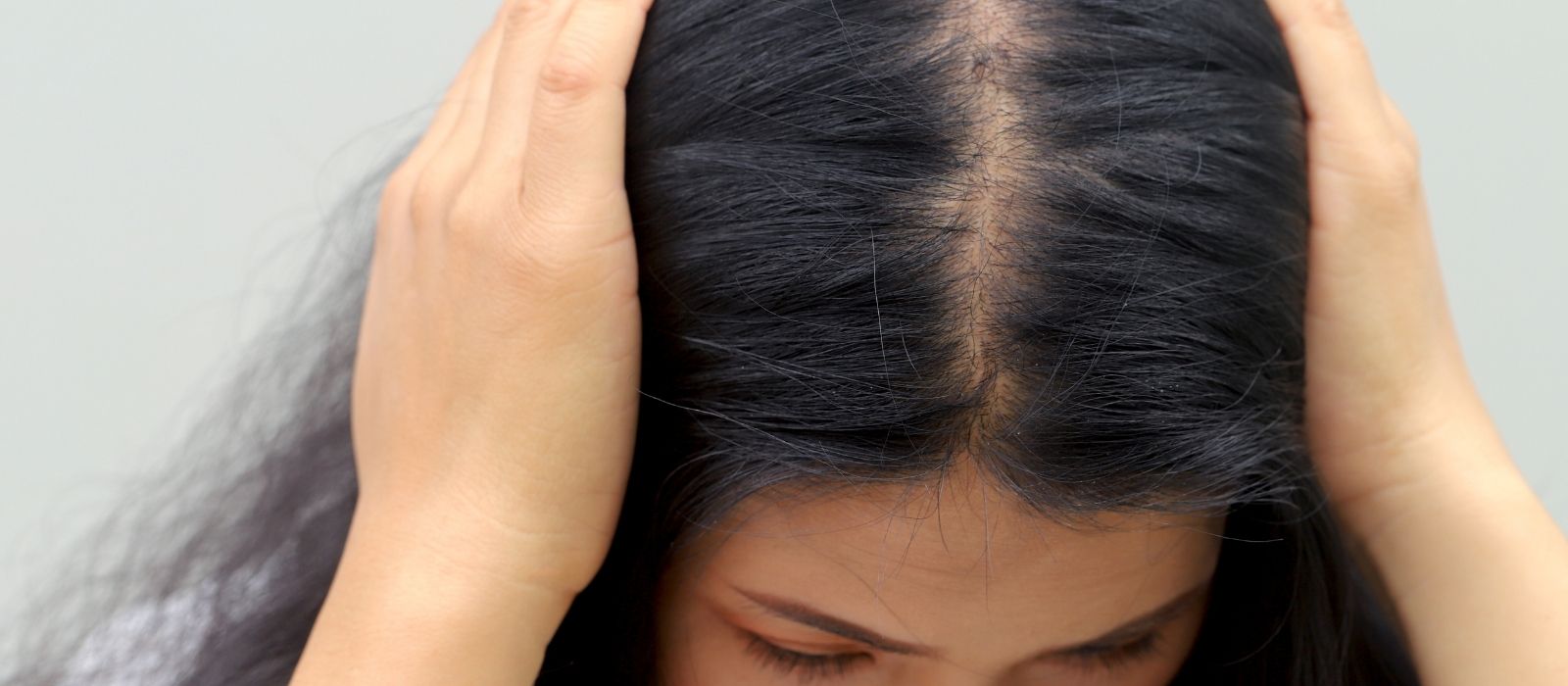
Hormonal hair loss follows predictable patterns. Female pattern hair loss typically starts with widening at the part and thinning at the crown. You might notice your scalp showing through more than before, especially in bright lighting. The hairline usually stays intact, unlike male pattern baldness.
PCOS-related hair loss combines crown thinning with excessive facial hair growth. Sudden facial hair growth paired with scalp hair loss strongly suggests elevated androgens.
Thyroid-related thinning affects the entire scalp uniformly. Your hair loses its thickness and shine, becoming brittle and prone to breakage. The outer third of your eyebrows might thin too, which is a classic thyroid sign.
Post-pregnancy hair loss happens three to six months after delivery when estrogen levels crash. Postpartum hair loss is temporary but can be dramatic, with women losing up to 30% of their hair volume.
Treatments That Actually Work
Minoxidil remains the gold standard for female pattern hair loss. The 5% foam works better than the 2% solution, despite what many doctors still prescribe. Applied twice daily to a dry scalp, it takes four to six months to see results. Side effects are minimal, but some women experience initial increased shedding.
Spironolactone blocks androgen receptors directly. Dermatologists typically start with 50-100mg daily, adjusting based on response and side effects. It works well for women with PCOS or those who don't respond to minoxidil alone.
Hormone replacement therapy can help menopausal women, but the type matters. Bioidentical estradiol and progesterone work better for hair than synthetic versions. Avoid testosterone in any HRT formulation since it converts to DHT.
Treating underlying conditions is crucial. Iron deficiency causes hair loss in many women, especially those with heavy periods. Optimizing thyroid function with the right medication dosage often restores normal hair growth within six months.
FAQ
Can hormonal hair loss be reversed completely
It depends on timing and severity. Early intervention with appropriate treatments can restore significant density, but fully miniaturized follicles rarely recover. The key is catching it before follicles stop producing hair entirely.
How long does it take for hormonal hair loss treatment to work
Most treatments require 6-12 months to show meaningful results. Hair growth is slow, and you need several full growth cycles to see improvement. Some women notice reduced shedding within 2-3 months, which is an early positive sign.
Will birth control pills help or hurt my hair loss
It depends on the type. Pills with anti-androgenic progestins like drospirenone can help hair loss, while those with androgenic progestins like levonorgestrel can worsen it. Many women experience temporary shedding when starting or stopping any hormonal contraceptive.