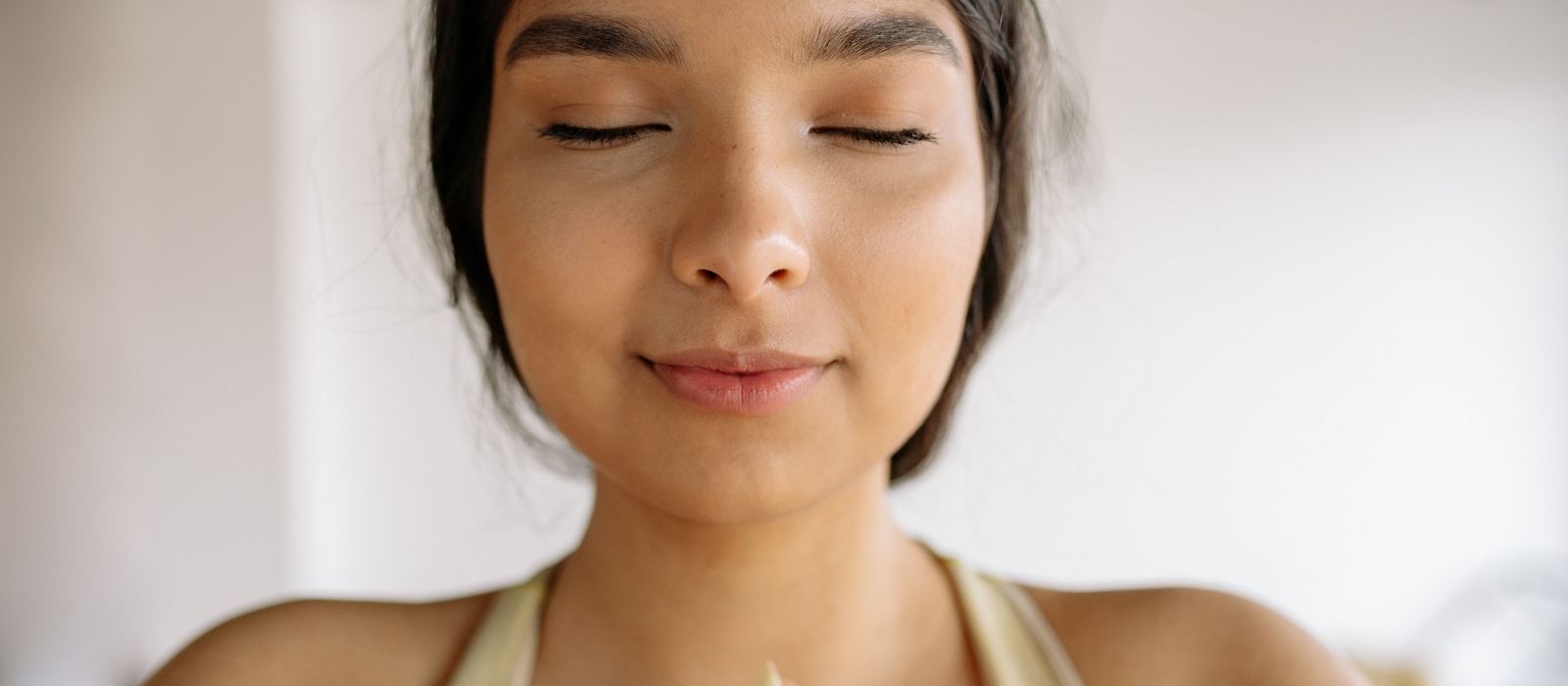
Learn how breathwork affects your skin through cortisol reduction and oxygen delivery. Simple breathing techniques that improve skin tone, reduce breakouts, and support healing.
You've tried every serum, changed your pillowcase nightly, and tracked your hormones. But your skin still looks dull, breaks out unpredictably, and heals slowly from any irritation. The missing piece might be something you're doing 20,000 times a day without thinking about it — breathing.
Most people breathe shallow and fast, especially when stressed. This creates a cascade that directly impacts your skin. Shallow breathing elevates cortisol, reduces oxygen delivery to tissues, and activates your sympathetic nervous system. Your skin responds with inflammation, slower healing, and disrupted barrier function.
Breathwork effects on skin happen through two main pathways: cortisol regulation and oxygen delivery. When you shift from shallow chest breathing to deep diaphragmatic breathing, you trigger your parasympathetic nervous system, lower stress hormones, and increase oxygen saturation in your blood. This creates the optimal environment for skin repair and regeneration.
How Cortisol Damages Your Skin
Cortisol breaks down collagen, thins your skin barrier, and triggers inflammatory responses. A study from Stanford University found that chronic elevated cortisol reduces collagen synthesis by up to 40%. This means slower wound healing, increased sensitivity, and accelerated aging.
High cortisol also disrupts your skin's natural pH balance. Your acid mantle, which protects against bacteria and irritants, becomes compromised. This explains why stress breaks out your skin and why breakouts cluster during high-pressure periods.
Shallow breathing keeps cortisol elevated even when the stressor is gone. Your body stays in fight-or-flight mode, continuously producing inflammatory compounds that show up as redness, sensitivity, and delayed healing.
The Oxygen-Skin Connection
Your skin cells need oxygen for cellular respiration — the process that produces energy for repair and regeneration. When you breathe shallowly, you're not fully oxygenating your blood. Less oxygen reaches your skin tissues, slowing down everything from collagen production to barrier repair.
Deep breathing increases oxygen saturation from around 95% to 99-100%. That 4-5% difference translates to noticeably improved skin function. Cells can complete repair processes faster, inflammation resolves more quickly, and your natural glow returns.
Research from the Mayo Clinic shows that controlled breathing techniques can reduce cortisol levels by 23% within just 10 minutes. For your skin, this means less inflammation, stronger barrier function, and improved healing capacity.
Breathwork Techniques That Actually Work for Skin
The 4-7-8 technique works best for cortisol reduction. Inhale for 4 counts through your nose, hold for 7 counts, exhale through your mouth for 8 counts. Do this 4 times, twice daily. The extended exhale activates your vagus nerve and triggers the relaxation response.
Box breathing targets oxygen delivery. Inhale for 4 counts, hold for 4, exhale for 4, hold empty for 4. Repeat for 5-10 minutes. This pattern maximizes oxygen exchange and helps establish steady, efficient breathing patterns throughout the day.
Belly breathing retrains your default breathing pattern. Place one hand on your chest, one on your belly. Breathe so only the bottom hand moves. Practice this for 10 minutes daily until it becomes automatic. Most people reverse this pattern due to stress and poor posture.
When You'll See Results
Immediate effects show up within 24-48 hours. Reduced puffiness, less morning facial tension, and calmer-looking skin happen quickly because cortisol drops fast with consistent practice.
Structural changes take 4-6 weeks. This includes improved skin barrier repair, better hydration retention, and more even skin tone. Your skin needs time to rebuild collagen and restore optimal function.
The key is consistency, not duration. Five minutes of intentional breathing twice daily beats hour-long sessions once weekly. Your nervous system responds to regular signals, not intense occasional ones.
Breathwork won't replace your skincare routine, but it addresses the internal factors that determine how well your products work. When your cortisol is regulated and your tissues are well-oxygenated, everything else — from nutrition for glowing skin to topical treatments — becomes more effective.
Frequently Asked Questions
Can breathing exercises actually clear acne?
Breathwork helps with stress-related breakouts by lowering cortisol and reducing inflammation. It won't clear hormonal or bacterial acne on its own, but it supports your skin's healing capacity. Combine it with appropriate acne treatment for your specific type for best results.
How long should I do breathwork for skin benefits?
Start with 5 minutes twice daily — once in the morning to set your nervous system, once before bed to process daily stress. You can increase duration as it becomes habitual, but consistency matters more than length.
Does breathwork help with skin aging?
Yes, by protecting existing collagen and supporting new collagen synthesis. Lower cortisol means less collagen breakdown, while better oxygen delivery provides the energy cells need for repair. It's preventive care that slows aging from the inside.