Body acne vs face acne treatment requires different approaches. Learn why body breakouts happen, what makes them different, and how to treat each effectively.
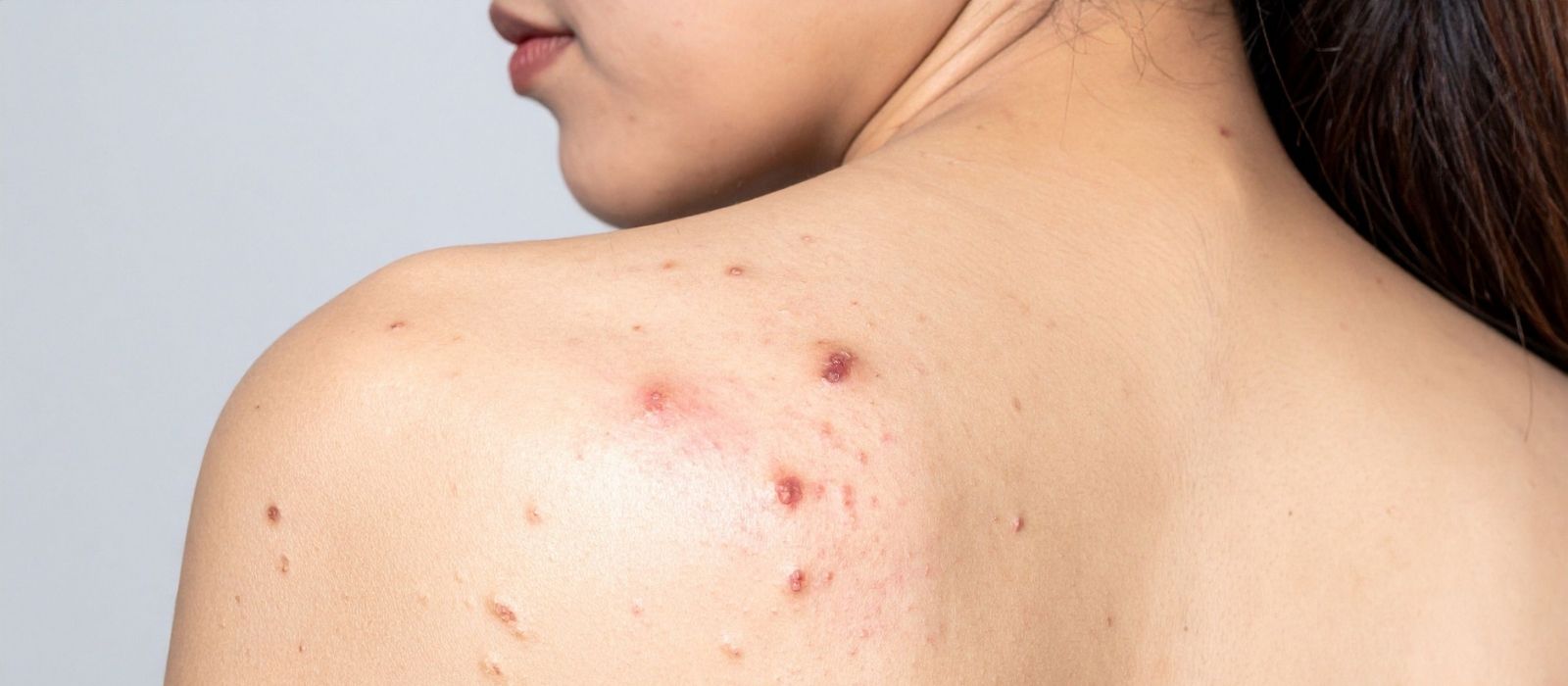
You've mastered your facial skincare routine. Your face is clear, glowing, maybe even Instagram-ready. Then you catch yourself in a changing room mirror and there it is — angry red bumps scattered across your back, chest, or shoulders that won't budge no matter what you try.
Here's what's happening: body acne isn't just face acne in a different location. The skin on your body behaves differently than facial skin. It's thicker, has more oil glands in certain areas, and faces completely different challenges — friction from clothing, trapped sweat, and products that never touch your face.
That salicylic acid cleanser that cleared your face? It might do nothing for the breakouts on your back. The gentle approach that works for sensitive facial skin? Your body might need something stronger. Understanding these differences changes everything about how you treat breakouts below your neck.
Why Body Acne Forms Differently Than Face Acne
Body skin is 30% thicker than facial skin. More thickness means stronger oil production and deeper pores that trap bacteria more easily. Your back and chest have some of the highest concentrations of oil glands on your body — sometimes even more than your T-zone.
Friction makes everything worse. Tight clothing, backpack straps, and synthetic fabrics create constant pressure that pushes oil and dead skin cells deeper into pores. This mechanical pressure doesn't exist on your face unless you're constantly touching it.
Sweat creates a perfect breeding ground for acne bacteria, especially when it sits on your skin for hours. Your face gets washed twice daily and stays exposed to air. Your back and chest stay covered, creating humid environments where bacteria thrive.
Hair products cause body breakouts that never touch your face. Conditioner, styling cream, and leave-in treatments run down your back in the shower. These products contain ingredients like coconut oil and silicones that clog body pores even when they don't affect facial skin.
The Treatment Differences That Actually Matter
Body acne responds to stronger concentrations. While facial acne often needs gentle 0.5% salicylic acid, body breakouts typically require 2% or higher. The thicker skin can handle it, and the deeper pores need more penetration to clear out trapped debris.
Physical exfoliation works better on the body. Those scrubs and brushes that dermatologists warn against for faces? They're often necessary for body acne. Dead skin cells build up faster on thicker body skin, and manual removal helps active ingredients penetrate better.
You need different application methods. Facial treatments go on clean, dry skin and absorb quickly. Body treatments often work better when applied to slightly damp skin after a shower, when pores are open and products can penetrate deeper.
Clothing and lifestyle changes matter more for body acne than face acne. Switching to breathable fabrics, showering immediately after sweating, and changing your sheets weekly can eliminate body breakouts completely — something that rarely works alone for facial acne.
What Works for Body Acne Specifically
Benzoyl peroxide body washes in 2.5% to 10% concentrations target bacteria effectively. Unlike leave-on facial treatments, washing with benzoyl peroxide lets you cover large areas without bleaching clothes or bedding.
Salicylic acid body sprays reach areas you can't see or access easily. A 2% spray applied daily after showering prevents new breakouts better than trying to apply cream to your entire back.
Retinoids work differently on body skin. While tretinoin might be too harsh for daily facial use, body skin often tolerates it better. The key is starting with adapalene (available over-the-counter) and applying it only to affected areas.
Your body skin needs a different routine than your face because the challenges are fundamentally different. Focus on prevention through proper cleansing and clothing choices rather than spot-treating individual breakouts.
When to Use Face Products on Your Body
Some facial products work well for body acne, but not the way you'd expect. Gentle facial cleansers work better for sensitive areas like your chest or upper arms. Clay masks designed for faces can spot-treat stubborn body breakouts effectively.
Never use body acne products on your face. The concentrations are too strong, and the formulations aren't designed for thinner, more sensitive facial skin. Hormonal acne treatment specifically requires different approaches depending on location.
Consider professional treatment for severe body acne. While you might treat mild facial acne at home successfully, widespread body acne often needs prescription antibiotics or stronger retinoids that require dermatologist supervision.
The most effective approach treats body acne as its own condition, not as facial acne that happens to be elsewhere. Understanding your specific acne type helps you choose between gentle maintenance and aggressive treatment protocols.
Body acne responds faster to lifestyle changes than facial acne does. Switching to fragrance-free detergent, showering after workouts, and wearing loose cotton clothing can clear body breakouts within weeks — results that take months to achieve with facial acne through skincare alone.
Frequently Asked Questions
Can I use my face acne products on my body
Some gentle facial cleansers and spot treatments work for sensitive body areas, but most facial products are too weak for thicker body skin. Body breakouts usually need stronger concentrations of salicylic acid or benzoyl peroxide to penetrate effectively.
Why do I get body acne but not face acne
Body skin is thicker with deeper pores, and it faces challenges your face doesn't — friction from clothing, trapped sweat, and hair product runoff. Some people's facial skin is less oil-prone while their body skin produces more sebum, especially on the back and chest.
How long does it take to clear body acne vs face acne
Body acne often responds faster to treatment because you can use stronger products and the skin is more resilient. With proper treatment, body breakouts typically improve within 4-6 weeks, while facial acne may take 8-12 weeks to show significant improvement.