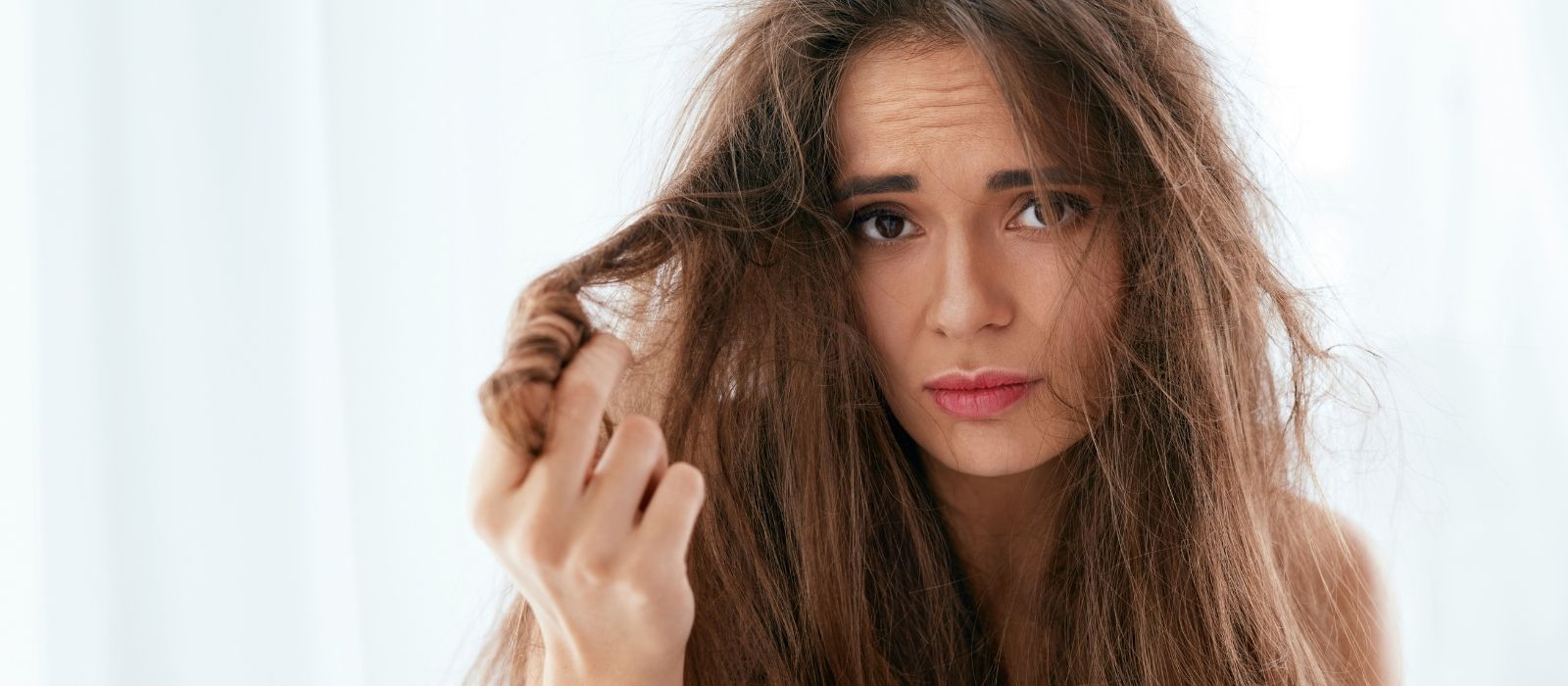
Most hair repair products coat the hair rather than repair it. Here's what ingredients actually do and what damage is genuinely reversible.
Your hair is dead. That bottle promising to 'repair damaged hair' can't bring it back to life any more than conditioner can heal a paper cut. Yet some products genuinely make damaged hair stronger and healthier-looking, while others just create the illusion of repair that washes out in two shampoos.
The difference comes down to what type of damage you're dealing with and which ingredients can actually address structural problems versus those that just smooth the surface. Most damage falls into three categories: broken disulfide bonds from chemical processing, missing protein from heat and mechanical damage, and lifted cuticles from friction and environmental stress. Only specific ingredients can target each type.
Here's what actually works for the best ingredients for damaged hair: bond builders for chemical damage, protein treatments for structural gaps, and film-forming agents for surface protection. Everything else is expensive moisturizer.
Bond Builders Actually Reconnect Broken Hair Structure
Chemical processing — bleaching, relaxing, perming — breaks disulfide bonds that hold your hair's protein structure together. These bonds can't reform on their own once broken. That's where bond builders come in.
Ingredients like bis-aminopropyl diglycol dimaleate (found in Olaplex) work by creating new cross-links between protein chains. A 2018 study in the International Journal of Cosmetic Science found this ingredient could restore up to 68% of hair's original strength after bleaching damage. Bond repair treatments work because they're creating actual chemical connections, not just coating the hair shaft.
Maleic acid and glyoxylic acid work similarly by forming new bonds, though they're less studied. These ingredients penetrate the hair cortex and link damaged protein chains back together. The repair is permanent until you damage those bonds again.
Protein Fills Structural Gaps From Heat and Mechanical Damage
Heat styling and rough handling create microscopic holes in your hair's protein structure. Hydrolyzed proteins — keratin, silk, wheat — are small enough to slip into these gaps and temporarily fill them. The keyword is temporarily.
Hydrolyzed keratin works best because it matches your hair's natural protein composition. It can penetrate the hair shaft and bind to damaged areas, creating a structural patch. Studies show protein treatments can increase hair's elasticity by up to 30% immediately after application.
The catch: protein patches wash out gradually over 4-6 weeks. You're not rebuilding your hair permanently, you're just filling holes until the protein rinses away. Protein overuse can make hair brittle, so damaged hair needs balance between protein and moisture.
Film-Formers Protect But Don't Repair
Silicones, polyquats, and other film-forming polymers coat your hair shaft to smooth lifted cuticles and reduce friction. They make damaged hair feel softer and look shinier, but they're not fixing anything structurally.
Cyclomethicone and dimethicone create a protective layer that reduces further damage from heat and friction. Polyquaternium-10 deposits on negatively charged damaged areas to smooth the surface. These ingredients work immediately but wash away with clarifying shampoo.
Film-formers are damage prevention, not repair. They're useful for protecting already-damaged hair from getting worse, especially if you're still using heat styling tools regularly.
Humectants and Emollients Address Dryness, Not Damage
Glycerin, hyaluronic acid, and other humectants pull moisture from the air into your hair. Oils and butters smooth the cuticle and add flexibility. These ingredients make dry hair feel better, but dryness and damage aren't the same thing.
Damaged hair often feels dry because lifted cuticles let moisture escape more easily. Humectants and emollients can temporarily improve how damaged hair feels and behaves, but they're not addressing the underlying structural problems.
Argan oil and shea butter work well for this temporary improvement. They fill in gaps between lifted cuticle scales and add flexibility to brittle hair. Just don't expect lasting repair from ingredients that wash out completely.
What Damage Can't Be Reversed
Some damage is permanent. Split ends can't be glued back together — they need to be cut off. Severe chemical damage that's dissolved significant protein structure can't be rebuilt with topical treatments. Heavily processed hair might only respond to protective treatments that prevent further damage.
Heat damage that's burned through the cuticle into the cortex creates permanent weak spots. You can fill them temporarily with protein and smooth them with film-formers, but the hair will always be more fragile in those areas.
The most effective approach combines bond builders for chemical damage, periodic protein treatments for structural gaps, and daily protective products to prevent new damage. Healthy new growth is still your best long-term solution.
FAQ
Do hair repair products actually work permanently?
Only bond builders create permanent structural repair by forming new chemical connections. Protein treatments and conditioning ingredients provide temporary improvements that wash out over several weeks.
How often should you use protein treatments on damaged hair?
Most damaged hair benefits from protein treatments every 2-4 weeks. Overuse can make hair brittle, so watch for signs like stiffness or increased breakage and reduce frequency if needed.
What's the difference between damage and dryness in hair?
Damage involves broken bonds, missing protein, or structural holes in the hair shaft. Dryness is just lack of moisture and oils. Damaged hair is often dry, but dry hair isn't necessarily damaged structurally.